
New York sets a precedent by banning subscriptions for equipment you have already paid for
New York bans charging subscriptions for activating equipment already installed in cars. The new law protects drivers from additional payments for features that do not incur ongoing costs for automakers.
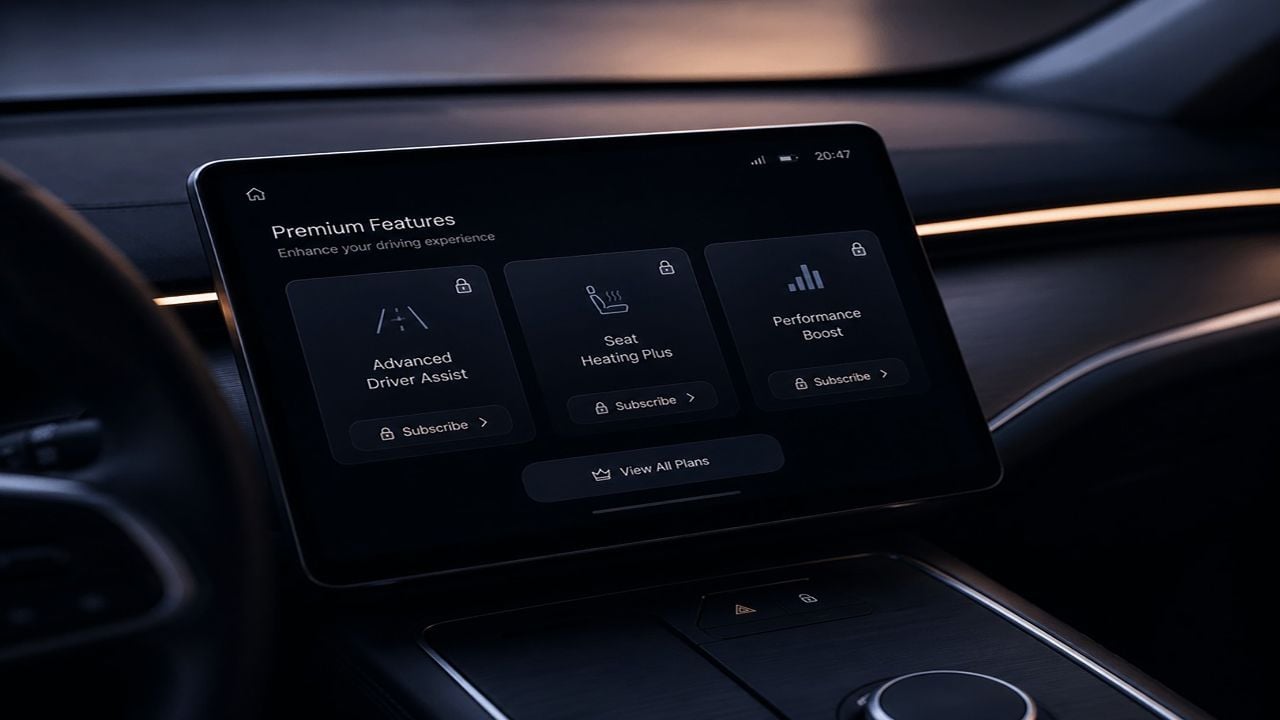

Buying a car and then discovering that you have to pay a monthly fee to use some of its features is a situation that is starting to feel familiar. Automakers have found in subscriptions a new source of income, but also a way to monetize components that are already installed in the vehicle.
Whether the customer decided it or not, those components add weight to the whole and increase emissions figures, for which they have to pay more. A practice that BMW debuted, offering its customers the possibility of enjoying optional equipment such as heated seats. A strategy that did not sit well with customers worldwide.

Charging for installed equipment without customer consent incurs fines
It did not help the manufacturer to justify such absurd claims as that it was a response for those customers who regretted not installing some equipment late. A situation that Volvo considered "excessive." A practice that has just encountered a significant obstacle in the United States.
New York has decided to intervene. Governor Kathy Hochul has signed a new law that prohibits manufacturers, dealers, and suppliers from charging subscriptions for certain functions that use factory-installed components and hardware and do not require ongoing maintenance or service to function.
The regulation will come into effect on February 27, 2027 and aims to prevent drivers from having to pay periodically to use equipment that is already part of the car they have purchased. Companies that violate the legislation face fines of up to 250 dollars for each point of sale where an infraction occurs.
Paying twice for using a component that is in the car
The new legislation in New York aims to prevent exactly that business model. If a manufacturer installs heated seats, a remote start system, or any other component that can function without generating additional costs, they cannot block its use with a subscription after purchase.
And this has important implications for an industry that is increasingly seeking more revenue after selling the vehicle. Manufacturers have been exploring ways to monetize their cars throughout their entire lifecycle, instead of limiting their profits to the moment of sale.

Tesla can still charge for its assisted driving systems
However, the new law has limits and does not mean the end of subscriptions in the automotive sector. The legislation distinguishes between physical equipment that is already installed and digital services that require additional resources to function.
For this reason, Tesla will still be able to charge for its advanced driving assistance systems. These functions depend on software and services that may require updates, connectivity, and other ongoing resources. The same goes for certain navigation services, connectivity, satellite radio, and roadside assistance, which are outside the prohibition. It is an important distinction because not all subscriptions follow the same model.
Should Europe follow in the footsteps of the United States?
The decision made by New York opens a debate that also makes sense in Europe. Manufacturers are betting on cars that are increasingly connected and digitized, but this transformation is also allowing the introduction of new ways to charge for features that traditionally were included in the vehicle's equipment.
For the buyer, the risk is ending up paying a monthly fee for elements that are already part of their car. And for manufacturers, subscriptions represent an opportunity to generate recurring revenue even many years after delivery.
The U.S. legislation does not eliminate that business model, but establishes a fairly clear boundary: if the component is already installed and does not require ongoing service to function, it should not become a mandatory subscription after purchasing the vehicle.
In Europe, where consumer protection and the right to repair is gaining prominence, the debate should also be on the table. Because one thing is to pay for a new service and quite another to have to keep paying to use something that is already inside your car.

* This news is an AI translation of the original content. Motenic.com is part of Motor.es.