
We are going from Barcelona to Paris in a 1977 Citroën 2CV: over 2,000 km to meet its electric heir
Let's go on an adventure! On the occasion of the presentation of the new Citroën 2CV Concept at the Paris Motor Show, we traveled from Barcelona to the French capital with the classic model on a 2,000 km journey.
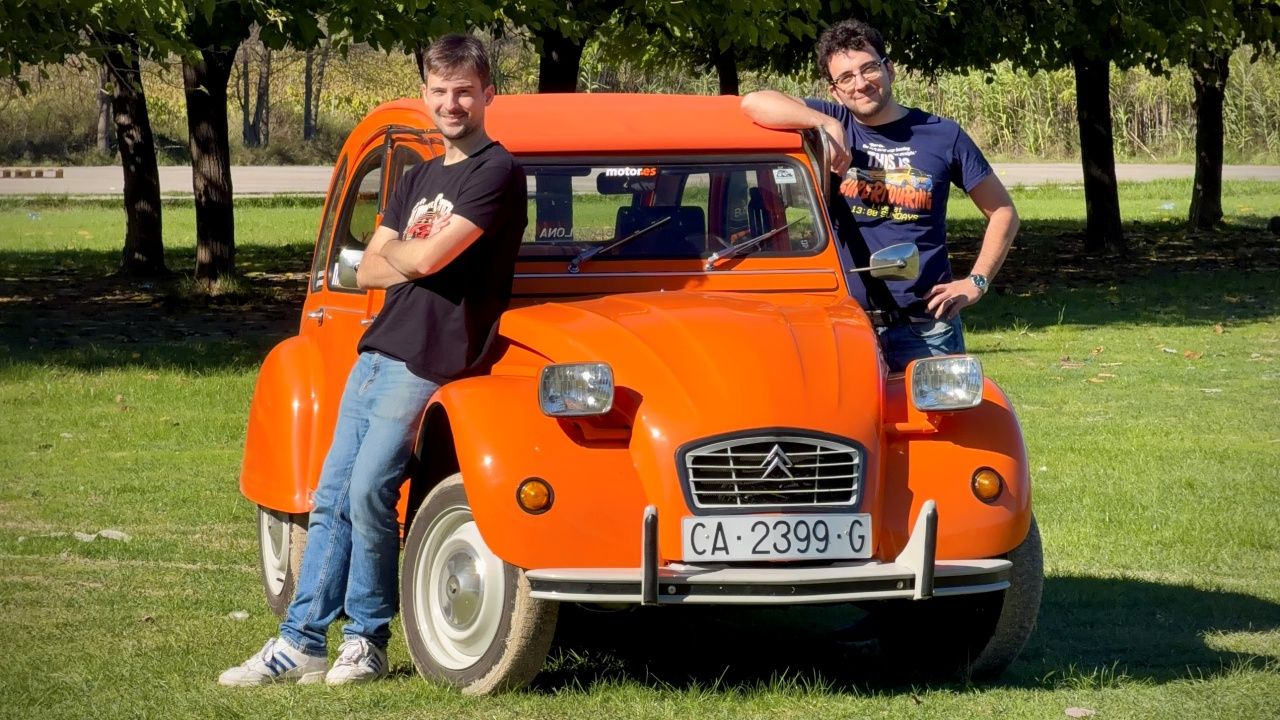

The first time I rode in a Citroën 2CV, I was 20 years old. It was 2016, and it coincided with my first trip to Paris to attend its centenary Motor Show, one of the most notable European events on the calendar for car enthusiasts. On that occasion, I attended as a visitor, not knowing that a decade later, I would return as a journalist. Life is full of surprises!
The 2CV had always been one of my favorite classics; however, that trip sealed my love for the model. I was only in the French capital for a weekend, and since I spent all Saturday at the Motor Show, I only had Sunday left to visit. What was the solution? Hire a guided tour with a well-known company that does tourist tours with a colorful fleet of Citroën 2CVs.
The first 2CV I rode was a yellow and black Charleston. The spark was instant: its characteristic and unmistakable sound, the peculiar suspension that seemed to float through the cobbled streets of Paris, the canvas roof that we removed to let in the autumn sun... The car attracted glances, smiles, and enthusiastic greetings as it passed. Traveling through the most famous places in the city of light aboard one of the most emblematic classics of France was an experience I will never forget.
Bringing a Citroën 2CV back to life
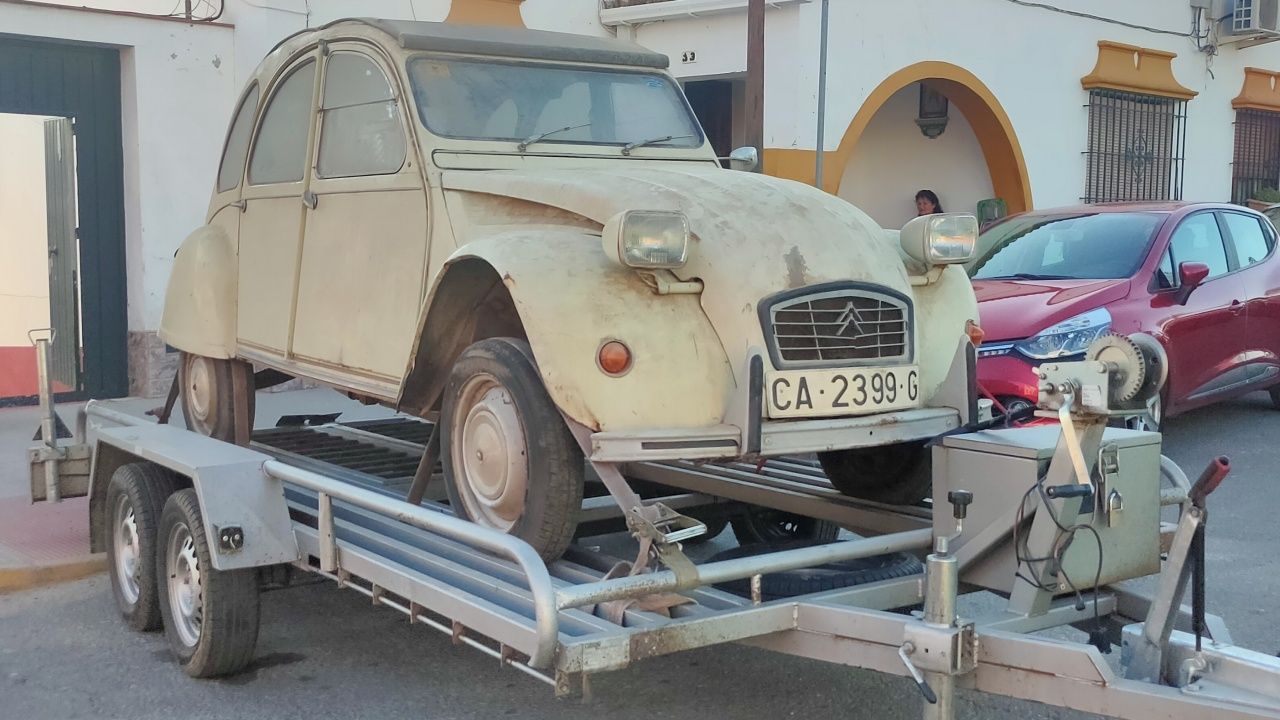
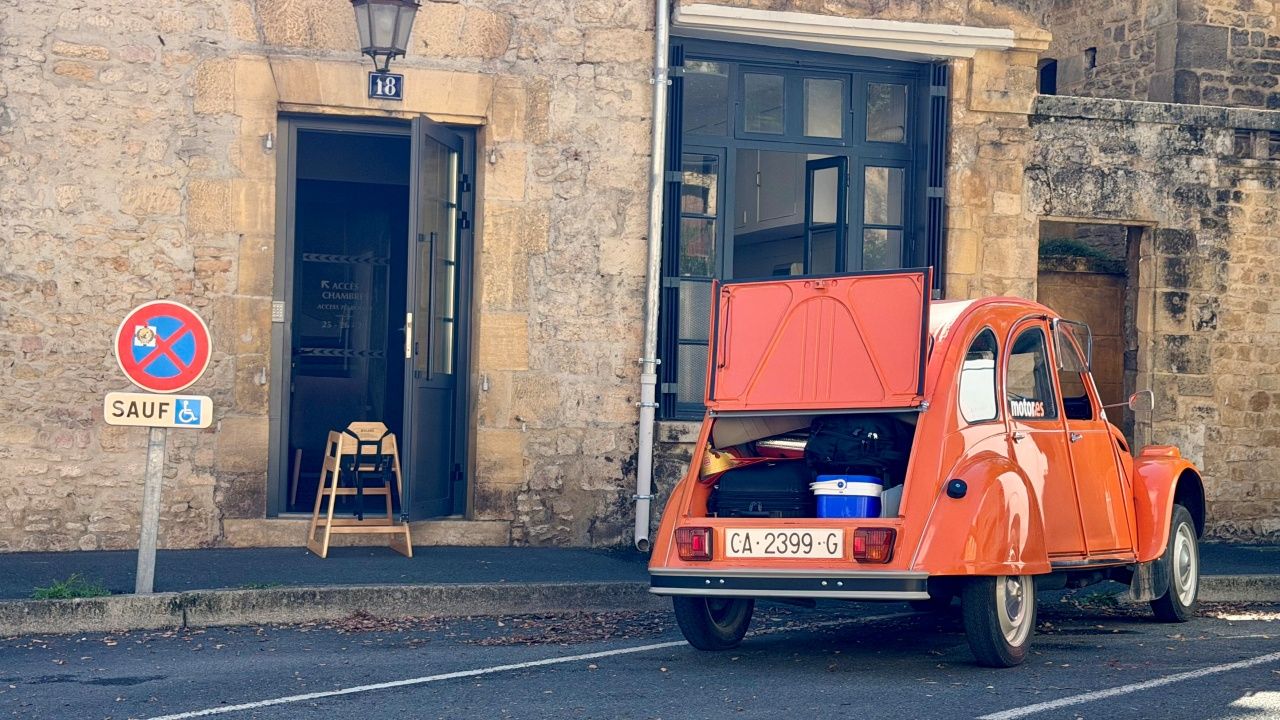
Five years later, I was able to fulfill the dream of having my own 2CV. It was a white 1977 model, a 2CV 6 CT that had been inactive for many years (its last ITV was from 2005). Although it spent most of its life in Jerez de la Frontera, at that time it was sleeping the deep sleep of the righteous in a town in Huelva.
The car was in very poor condition: some rot in the floor, a chassis that had seen better days, and many damages on the entire left side because, some time ago, some pranksters saw it parked on the street and thought it would be funny to flip it over.
After a long restoration process that involved replacing practically half the car (luckily, all new parts are still being manufactured because several companies acquired the tooling at the time), a color change (I chose 'Mandarine' orange, an original catalog hue) and the homologation of a new reinforced and galvanized chassis, the car returned to the road in 2023.
Since then, my 2CV has accompanied me on numerous adventures (cars are meant to be used, right?); however, I always had one thing clear: one day I would return to Paris with it. When last May Citroën announced its intention to revive the model for this year's Motor Show, I didn't hesitate for a second: I quickly proposed to the guys at Motor.es to go there with the classic model to meet its descendant.
The starting point would be Barcelona, so we're talking about a trip of just over 1,000 km (plus the same back) divided into three stages (Barcelona-Carcassonne, Carcassonne-Limoges, and Limoges-Paris).
Fortunately, I didn't have to face this challenge alone, as I had the great Agustín Gustingorriz as my expedition partner, whom most of you probably know from his YouTube channel or his collaborations on social media with Motor.es.
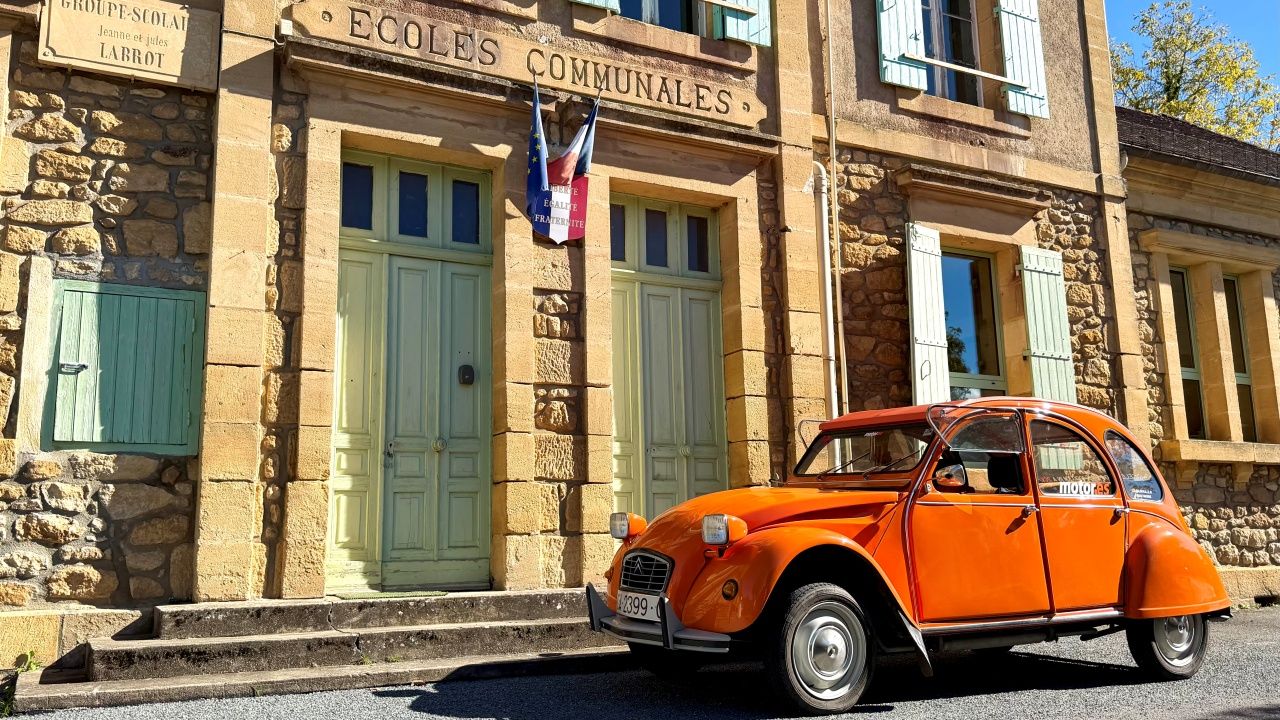
First and second stage
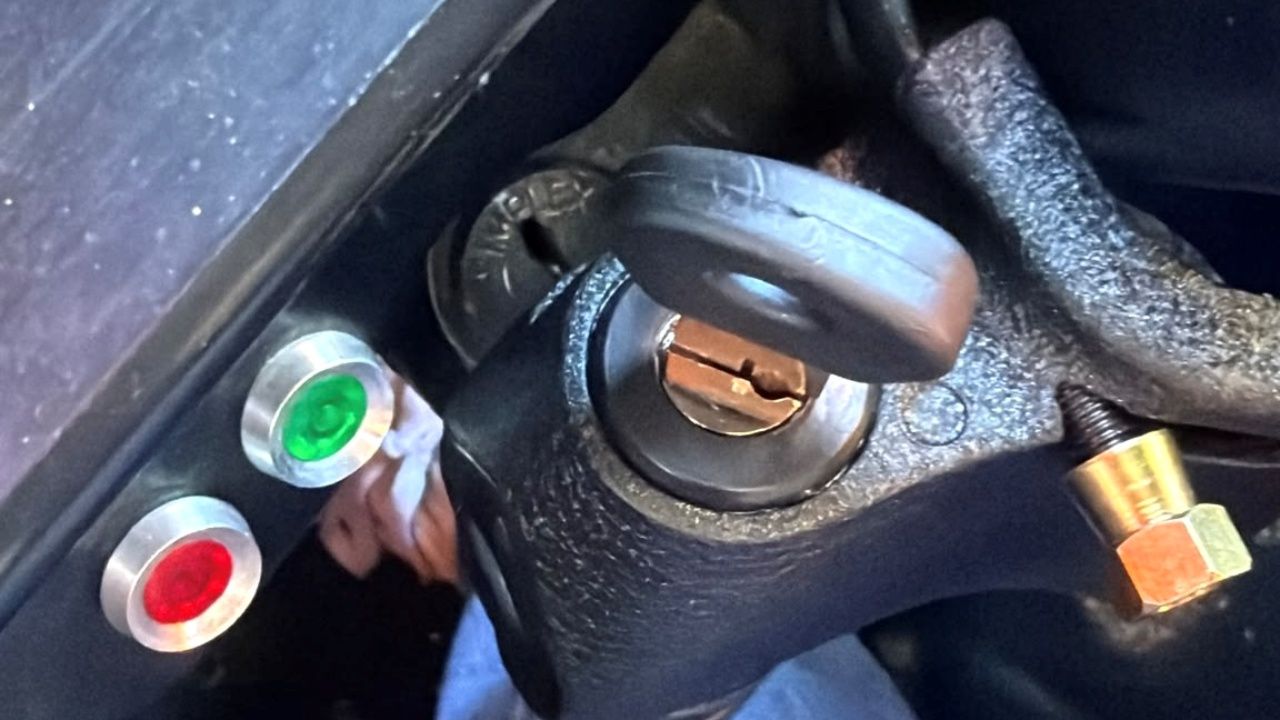
Our journey began on October 9th in Sitges. In the weeks leading up, the car underwent a complete tuning at a specialized workshop; however, vintage cars are unpredictable, and the day before we left, the starter cylinder began to fail: the key wouldn't go in, and when it did, it got stuck...
Fortunately, Citroën two-cylinder cars have one of the strongest and most cohesive fan communities in the classic car world, and through a WhatsApp group, I was able to get a new lock in record time. By the next morning, I had it at home! Here, I want to thank Xus Carmona, without whose help our journey might have ended before it even began. As Citroën Dyane's advertisement used to say: these cars are for charming people.
Since we didn't have a saw to remove the old cylinder, we ended up installing the new one on top, so throughout the trip, the 2CV had two locks like a Rolls-Royce. Between one thing and another, we ended up leaving after lunch. Ahead of us were almost 400 km to Carcassonne, which we traveled entirely on the highway due to time constraints.
Wind, rain, and surprisingly tight fuel consumption
The Citroën 2CV feels at home on winding secondary roads, so the highway is not precisely its natural habitat. We're talking about a vehicle whose design dates back to 1948, with performance that, being generous, can only be described as modest (my unit is equipped with a tiny 602 cubic centimeters air-cooled two-cylinder engine that doesn't reach 30 HP).
If you want to know more about the history and evolution of the Citroën 2CV, from its conception to the end of its production in 1990, I recommend you check out this article I dedicated to it a few years ago for its 75th anniversary.
Much of the trip was at night, uphill, with a strong headwind and trucks overtaking us on the climbs (the 2CV does great on flat roads and speeds downhills, but it struggles uphill). Agustín witnessed firsthand that, despite the very comfortable suspension, it’s a noisy car that gets very hot in the cabin even with the heating off (which combined with the cold air coming in through the doors creates a microclimate that takes some getting used to) and has to be driven at a calm pace. We always drove at a speed of 90-100 km/h, although on some slopes it dropped to 80 km/h.

During one of the stops we made, the driver's door handle fell off because the screw that held it had come loose (which I later found under the seat). Since the door still closed, we were able to continue without major issues. After 362 km, we arrived in Carcassonne exhausted; however, the fuel consumption was very tight given the driving conditions: 6.4 liters/100 km. Spoiler: that was the day the car consumed the most.
The second day was supposed to be calmer than the first... but it also ended up becoming complicated due to the rain. After refilling the oil (which didn't need to be done again in the following days) and refueling, we set off for Limoges, again via highway. The car didn't hit secondary roads until the trip back, which we took much more slowly.
Once past Toulouse, it started pouring rain, forcing us to slow down and be more careful: the wipers are not particularly fast or effective, and the brakes are, understandably, light-years away from those of a modern car (there’s no servo, ABS, or other modern features that fortunately became standard decades ago); in fact, it's important to rely heavily on engine braking. The lighting, however, is notable for a car from the 70s (due to having replaced the reflectors and changed the European headlight for halogen lights). In this stage, fuel consumption dropped to 6.2 liters/100 km.
Third stage and Paris Motor Show
The last stage was also the longest; fortunately, the weather for the first time cooperated and the weather was nice throughout the day. Additionally, much of the journey was downhill, which is why we were able to maintain 100-110 km/h for long stretches. During the stops to eat or refuel, people approached the car, took photos, and in some cases even told us that they had seen on TV that Citroën was going to launch a new electric 2CV. It's clear that it remains an icon for the French.
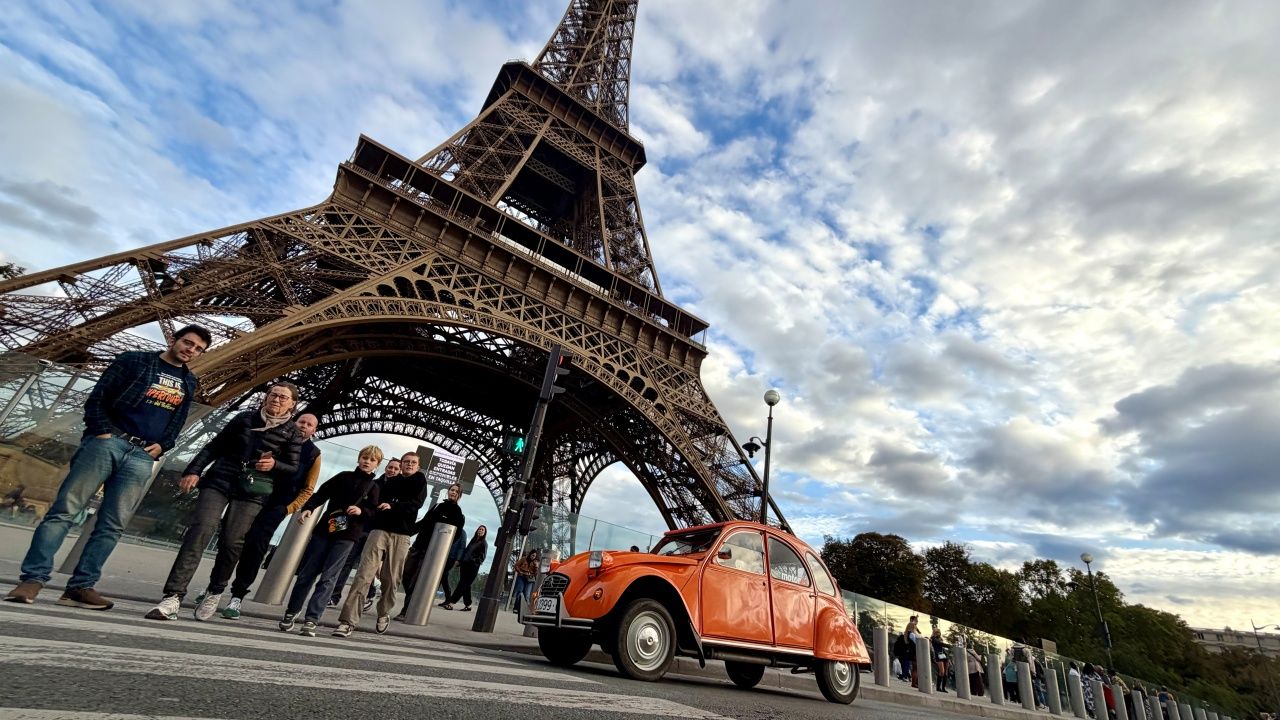
Arriving in Paris was exactly as we expected: with a traffic jam despite it being Sunday. Although the city has a large low-emission zone, it doesn’t apply on weekends, allowing us to end our trip at the base of the Eiffel Tower, where we took a brief photo session. The consumption was even lower than in the previous two stages, with barely 6 liters/100 km.
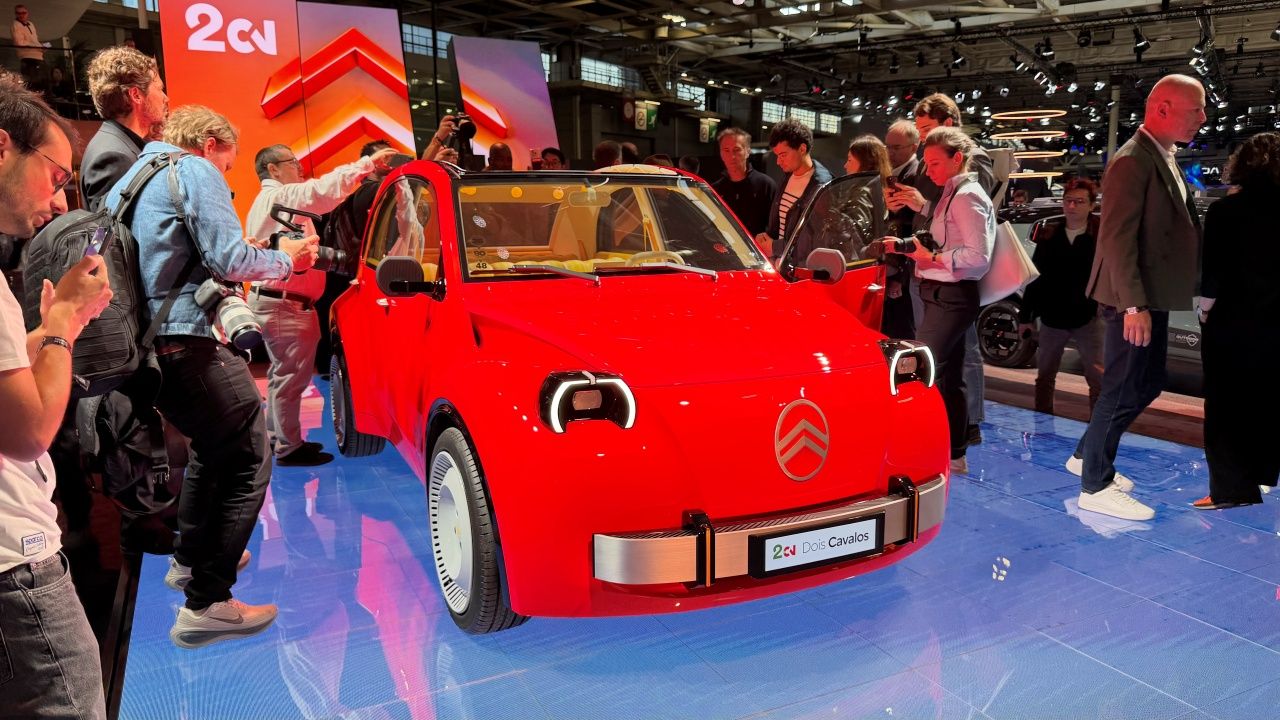
The next day, the car had to stay in the hotel parking lot due to the low-emission zone, which is active until 8 p.m., which is why we walked to the Motor Show. There we were able to meet in person the Citroën 2CV Concept, which had been officially presented the night before at a Stellantis group event attended by our colleague Fran Valle.
The prototype was the star of the Motor Show; in fact, it was very difficult to get close enough to film due to the crowd surrounding it, so we had to wait several hours for it to clear a bit. Additionally, Citroën surprised everyone with a second show car: the 2CV Fourgonnette Concept, a cute van version that, according to the brand representatives, will also reach production.
According to Citroën, the design of the 2CV Concept, which boldly reinterprets the peculiar lines of the classic, corresponds 90% to that of the final model. Although the rear wheel covering has been removed, other features such as the headlights not integrated into the body, the voluptuous fenders, the striated hood, or its characteristic side line are retained.
Of course, it’s convertible, while the rear door is painted black to pay homage to the early 2CVs, whose canvas reached down to the license plate and covered both the roof and the trunk. We can't forget to mention small nods like the pressed steel wheels, the indicators on the C pillar (a tribute to the models of the 50s and 60s), or the graphics of the infotainment system made by a Belgian comic artist.
The year's most awaited return
The new 2CV will be 100% electric and will be manufactured at Stellantis' plant in Pomigliano d'Arco (Naples, Italy) starting in 2028. With a target price of around 15,000 euros before subsidies, it is set to become one of the most affordable electric cars on the European market. The conceptmeasures 3.76 meters in length; on the other hand, the final model will weigh around 1,000 kg (for comparison, my 2CV weighs 600 kg).
In short, we are faced with a very ambitious proposal that seeks to revive the formula that made the original 2CV a success: while that was created to motorize post-war rural France, its descendant will aim to make electric mobility more accessible to the European public. The way to achieve this will be the same: through a simple, economical, and very intelligent vehicle.
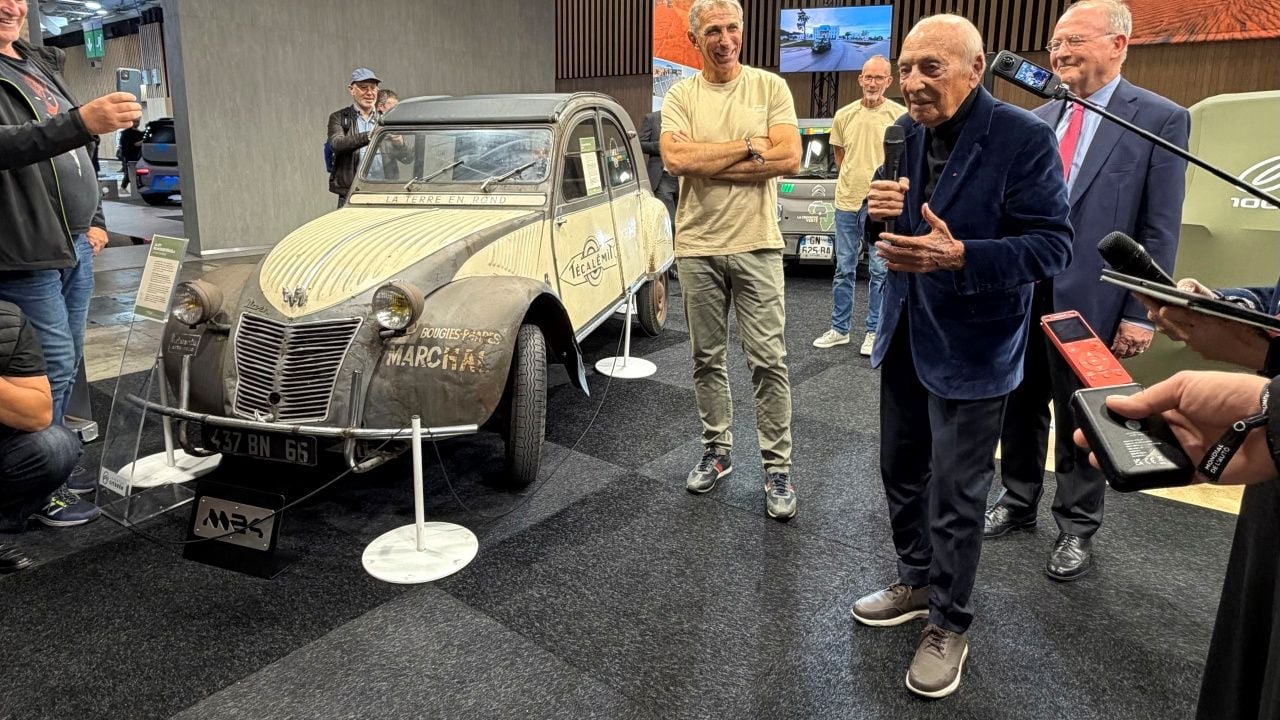
The Paris Motor Show also held another surprise for us: the famous advertiser Jacques Séguéla, known for his work at Citroën, reunited with the 2CV AZLP PO with which he traveled around the world in 1958 and 1959, an adventure that was captured in a book ("The around-the-world trip in a 2CV"). The vehicle has been preserved exactly as it was after the feat, and the 92-year-old elder couldn’t help but get emotional and even kiss the old bodywork.
On Monday night, we had to sleep outside of Paris to avoid being fined the next day for driving in the low-emission zone. We once again divided the return trip into three stages, with exactly the same stops as on the way there; however, we added some national roads so Agustín could enjoy the car in its element. We arrived in Barcelona on October 15th after covering a total of 2,376 km. The car consumed 144 liters of gasoline, which equals an average of 6.06 liters/100 km.
What do I take away from this trip? Beyond having had the opportunity to return to Paris with my own 2CV, which has been a remarkably meaningful experience, I leave with the feeling of having witnessed the birth of something great. The Citroën 2CV is back and ready to shake up the industry again. I'm not going to lie: I can't wait to see the final model, which will debut coinciding with the 80th anniversary of its endearing predecessor. At a time when personality-less, large, and expensive cars have become the norm, this renaissance is worth celebrating.

* This news is an AI translation of the original content. Motenic.com is part of Motor.es.